Luxury Massage Chair Guide: Features, Technology & Wellness Insights
Luxury massage chairs have evolved considerably beyond basic vibrating recliners. Modern systems combine mechanical rollers, reclining frames, air-compression chambers, heating elements, sensors and software-controlled programs to create a more personalized relaxation experience.
Terms such as 3D, 4D, AI body scanning, SL-track, zero gravity, air compression and smart controls are now common in the category. However, these technologies perform different functions, and a higher specification does not automatically mean a better experience.
A useful way to understand a luxury massage chair is to look at its technology in layers: the roller mechanism determines how the massage is delivered, the track determines coverage, sensors help with positioning, the reclining system changes posture, and software controls how these elements work together.
What Is a Luxury Massage Chair?
A luxury massage chair is an electronically controlled recliner designed to reproduce different massage movements through mechanical rollers and air-compression systems.
Depending on its configuration, a modern chair may work on areas including:
- Neck and shoulders
- Upper and lower back
- Waist
- Hips
- Arms and hands
- Thighs
- Calves
- Feet
The main massage mechanism is usually a roller carriage that travels along a track inside the backrest. Airbags positioned around other parts of the chair provide compression, while heating and reclining systems add further functions.
The combination of these systems differentiates advanced massage chairs from simple vibrating seats.
Why Massage Chair Technology Has Become More Advanced
Modern massage-chair development is increasingly focused on personalization.
A basic chair may follow a predetermined movement pattern. More advanced systems can detect the user's body position and adjust the roller location, pressure or movement.
Current designs can incorporate:
- 3D or 4D roller mechanisms
- Body scanning
- Multiple massage programs
- Adjustable intensity
- Air compression
- Foot rollers
- Heat
- Zero-gravity positioning
- Touchscreen controls
- Voice commands
- Smartphone connectivity
- User profiles
The objective is to make the chair's mechanical movements more adaptable rather than simply adding more preset programs.
2D, 3D and 4D Massage Technology
The roller mechanism is one of the most important parts of a massage chair.
2D Rollers
A 2D mechanism generally moves the rollers vertically and horizontally across the back.
Its movement is comparatively straightforward, with limited depth adjustment.
Typical characteristics include:
- Up-and-down movement
- Side-to-side movement
- Fixed or limited depth
- Basic massage programs
- Simpler mechanical operation
3D Rollers
3D technology adds forward-and-backward movement.
This allows the rollers to move toward the user's body and retract from it. As a result, the chair can provide greater control over massage depth and pressure.
A 3D system can therefore offer:
- Adjustable massage depth
- More variable pressure
- Greater control over roller contact
- More personalized massage intensity
For many users, moving from 2D to 3D represents a meaningful technological improvement because depth becomes adjustable.
4D Rollers
4D technology generally builds on 3D movement by introducing more dynamic control of roller speed and rhythm.
Instead of moving at a constant pace, the rollers can vary their motion during a programmed sequence.
This can create:
- Slower movements
- Faster movements
- Variable rhythm
- More fluid transitions
- Different pressure patterns
The term "4D" is not a universal technical standard, so the exact implementation varies between manufacturers.
2D vs 3D vs 4D
| Technology | Main Roller Movement | Main Advantage |
|---|---|---|
| 2D | Vertical + horizontal | Basic massage movement |
| 3D | Adds depth | Adjustable pressure |
| 4D | Adds dynamic speed/rhythm | More fluid massage experience |
A 4D label alone should not determine the quality of a chair. Track design, body scanning, roller construction and software programming also matter.
Understanding S-Track, L-Track and SL-Track
The track determines how the roller mechanism travels.
S-Track
An S-track is designed to follow the natural curvature of the spine.
It primarily focuses on the back area.
L-Track
An L-track extends beyond the lower back toward the seat area.
This allows the rollers to reach further down the body.
SL-Track
An SL-track combines the curved path of an S-track with the extended coverage associated with an L-track.
It can therefore provide a longer massage path from the upper back toward the lower body.
The important distinction is:
3D and 4D describe roller movement, while S, L and SL describe the track path.
A chair can therefore have both 4D rollers and an SL-track because they perform different functions.
AI and Automatic Body Scanning
AI is increasingly appearing in massage-chair specifications, but the term can mean different things depending on the system.
One of the most useful technologies is automatic body scanning.
A scanning system can detect body reference points such as:
- Shoulder position
- Body height
- Back position
- Spinal alignment
- Roller contact location
The chair can then adjust the starting position or massage path accordingly.
This is particularly useful when several people with different body sizes use the same chair.
AI Does Not Always Mean the Same Thing
A chair advertised as AI-enabled may simply use automated body detection, while another system may combine sensors with more extensive program adjustment.
Therefore, it is better to examine what the system actually does:
- Does it scan shoulder height?
- Does it map the back?
- Does it automatically position the rollers?
- Can it change intensity?
- Can it adapt the massage during operation?
- Can it save user preferences?
The actual functionality is more meaningful than the AI label itself.
Zero-Gravity Reclining
Zero gravity is a reclining configuration rather than a massage technique.
The chair reclines the user's body and elevates the legs to create a more supported posture. This changes how body weight is distributed across the backrest, seat and leg section.
Zero-gravity positioning can help create:
- A more reclined posture
- Greater body support
- More consistent contact with the rollers
- A relaxed seating position
- A different pressure experience during massage
The terminology is not necessarily standardized across manufacturers, so the exact reclining angle and mechanism can differ between models.
Single and Multiple Zero-Gravity Positions
Some chairs provide one zero-gravity position, while advanced systems may provide several reclining stages.
Multiple positions can allow users to adjust:
- Backrest angle
- Leg elevation
- Roller contact
- Overall body position
The number of positions should not be considered in isolation. The smoothness and stability of the reclining mechanism are also important.
Air Compression Technology
Airbags are another major component of full-body massage chairs.
Small inflatable chambers can be placed around different areas of the body and inflated in controlled sequences.
Common air-compression areas include:
- Shoulders
- Arms
- Hands
- Waist
- Hips
- Thighs
- Calves
- Feet
Air compression creates a squeezing and releasing sensation that differs from the mechanical movement of rollers.
Airbag Count vs Airbag Placement
A high number of airbags does not automatically indicate better coverage.
Placement is often more informative.
A well-designed system can distribute compression across several body regions instead of concentrating many airbags in one area.
When comparing specifications, look for a coverage diagram rather than focusing only on the total number of airbags.
Foot and Calf Massage
Premium chairs often include dedicated mechanisms for the lower legs.
These can combine:
- Calf airbags
- Foot airbags
- Sole rollers
- Arch rollers
- Heel pressure
- Calf compression
Foot rollers may move beneath the soles while airbags compress the sides and upper portions of the feet.
This creates a separate lower-body massage system rather than simply extending the back roller mechanism.
Heat Technology
Heat is commonly integrated into premium massage chairs.
Heating elements may be located around:
- Lower back
- Waist
- Calves
- Feet
- Backrest
Heat is primarily a comfort feature and is usually combined with massage programs.
Some systems allow users to control:
- Heat on/off
- Heating zones
- Session duration
- Temperature intensity, depending on the model
Heat should therefore be viewed as an additional comfort technology rather than the central massage mechanism.
Stretch and Reclining Programs
Some advanced massage chairs combine the reclining mechanism, leg movement and air compression to create stretching-style programs.
A typical sequence might involve:
- Reclining the backrest
- Positioning the legs
- Applying air compression
- Moving rollers along the back
- Returning the body to a neutral position
These programs can create a different experience from conventional roller massage.
The exact movement should always be evaluated according to the manufacturer's instructions.
Massage Techniques in Modern Chairs
Luxury massage chairs can offer multiple programmed techniques.
Kneading
The rollers move in circular or alternating patterns to create a kneading sensation.
Tapping
Rapid movements provide a tapping-style sensation across selected areas.
Rolling
The rollers travel smoothly along the back for broader coverage.
Shiatsu-Inspired Programs
Some programs are designed around pressure patterns inspired by Japanese massage traditions.
Compression
Airbags inflate and release around selected parts of the body.
Stretching
The chair combines reclining, leg movement and compression to create a stretching-style routine.
The number of techniques listed in a specification sheet is less important than the quality of the underlying mechanical system and the ability to adjust the programs.
Smart Controls and Connectivity
Technology is not limited to the mechanical system.
Some luxury chairs include digital interfaces such as:
- Touchscreen controllers
- Smartphone applications
- Bluetooth connectivity
- Voice commands
- Digital user profiles
- Custom programs
- Adjustable intensity settings
- Wireless audio
These functions primarily improve convenience and personalization.
For example, voice control may allow a user to start a program without reaching for the controller, while an application can provide additional settings.
However, connectivity does not necessarily improve the underlying roller mechanism.
User Profiles and Personalization
Multiple-user households can benefit from saved profiles.
A profile may remember settings such as:
- Massage intensity
- Preferred program
- Roller depth
- Airbag intensity
- Heat settings
- Reclining position
Advanced systems can combine these settings with body scanning.
This creates a more repeatable experience for different users without requiring the chair to be manually configured every time.
Wellness Insights
Massage chairs are primarily wellness and relaxation devices, but research has investigated their possible physical and psychological effects.
A 2024 rapid scoping review identified 18 studies and reported potential benefits associated with massage-chair use, including stress reduction, reduced mental fatigue, improvements in muscle stiffness and possible improvements in quality of life. The review also noted that the evidence base remains limited and included reports of complications.
A 2026 study published in Complementary Therapies in Medicine examined automated massage-chair sessions across several groups and reported reductions in stress and anxiety in one group, reductions in blood pressure and heart rate among hospital staff with hypertension, and improvements in low-back function and pain in participants with chronic low-back pain. These findings are encouraging but do not establish that massage chairs are a treatment for medical conditions.
Potential Wellness Areas
Depending on the individual and the type of use, massage-chair sessions may be associated with:
- Relaxation
- Stress management
- Temporary muscle comfort
- Reduced perception of stiffness
- Mental relaxation
- General wellness routines
Results can vary significantly between individuals.
Massage Chair Technology vs Medical Treatment
A massage chair should not be confused with medical treatment.
Its primary role is automated massage and relaxation.
People experiencing persistent pain, injuries, neurological symptoms or other health concerns should seek appropriate professional guidance rather than relying on a massage chair alone.
This distinction is particularly important because deeper or more intensive massage is not necessarily appropriate for every person.
Safety Considerations
Users should always follow the manufacturer's operating instructions.
Extra caution may be appropriate for people with:
- Recent injuries
- Certain cardiovascular conditions
- Significant bone or joint problems
- Certain neurological conditions
- Implanted medical devices
- Pregnancy
- Other conditions affected by pressure, heat or reclining
Anyone uncertain about whether massage-chair use is appropriate should consult a qualified healthcare professional.
Research reviews have also identified occasional complications associated with massage-chair use, reinforcing the importance of responsible operation.
How to Evaluate a Luxury Massage Chair
Rather than comparing the number of features, evaluate the chair in a logical order.
1. Examine the Roller System
Determine whether the chair uses 2D, 3D or 4D technology.
Pay attention to actual depth adjustment and movement rather than the label alone.
2. Check the Track
Understand whether it uses an S, L or SL configuration and where the rollers actually travel.
3. Evaluate Body Scanning
Find out what the scanning system detects and what adjustments it makes.
4. Examine Zero-Gravity Positions
Look at how the chair reclines and whether multiple positions are available.
5. Check Air Compression Coverage
Review which body regions receive compression.
6. Examine Foot Technology
If lower-body massage is important, check the actual roller and airbag configuration around the feet and calves.
7. Consider Heat
Determine which areas are heated and whether the temperature or zones can be adjusted.
8. Review Program Customization
A large program count is less meaningful if most programs cannot be adjusted.
9. Consider Controls
Touchscreens, apps and voice control can improve convenience, but they should come after the core mechanical features.
10. Check Chair Dimensions
A luxury massage chair can occupy considerable floor space, particularly when fully reclined.
Measure:
- Available floor area
- Door width
- Ceiling clearance where relevant
- Reclining clearance
- Distance from walls
- Electrical outlet location
Which Features Matter Most?
Not every feature deserves equal attention.
| Feature | Importance | Main Purpose |
|---|---|---|
| 3D/4D rollers | High | Massage depth and movement |
| Track design | High | Massage coverage |
| Body scanning | High | Position personalization |
| Air compression | High | Full-body compression |
| Zero gravity | High | Reclining and body positioning |
| Foot rollers | Medium-High | Lower-body massage |
| Heat | Medium | Added comfort |
| User profiles | Medium | Personalization |
| Voice control | Medium-Low | Convenience |
| Bluetooth audio | Low | Entertainment |
| Lighting effects | Low | Ambience |
This does not mean lower-ranked features are useless. It means they generally have less influence on the fundamental massage mechanism.
Common Marketing Terms Explained
"AI Massage"
Usually refers to software-assisted personalization, body scanning or automated adjustments. The exact capability varies.
"4D Massage"
Generally refers to 3D roller movement combined with more dynamic speed or rhythm control.
"Zero Gravity"
Refers to a reclined body position designed to distribute weight and support the user.
"Full Body"
Usually indicates that the chair provides massage or compression across several regions beyond the back.
"SL-Track"
Describes a track that follows a curved back path and extends toward the seat.
"5D, 6D or 8D"
These labels are not standardized across the industry. They should be investigated at the mechanical level rather than interpreted literally as additional physical dimensions.
What Should Be Prioritized in a Luxury Chair?
For someone researching a premium massage chair, a sensible priority order is:
Roller quality → Track coverage → Body scanning → Air compression → Reclining → Foot technology → Heat → Software and connectivity
This approach keeps attention on technologies that directly affect the massage experience.
A chair with fewer digital features but a well-designed mechanical system can be more meaningful than one with a long list of connectivity features.
How Technology May Develop Further
The next stage of massage-chair development is likely to focus on greater personalization.
Potential developments include:
- More precise body mapping
- Improved pressure sensors
- Real-time roller adjustment
- Adaptive massage programs
- More sophisticated user profiles
- Better voice interfaces
- Improved software integration
- More precise lower-body mechanisms
The broader trend is toward systems that respond more intelligently to individual users rather than simply running fixed programs.
Frequently Asked Questions
1. What is the most important technology in a luxury massage chair?
The roller mechanism and track are among the most important components because they determine how the mechanical massage is delivered and how much of the body can be reached.
2. Is 4D better than 3D?
4D generally adds more dynamic speed and rhythm control to the depth adjustment found in 3D systems. Whether the difference is worthwhile depends on the user's preferences and the overall quality of the chair.
3. What does AI mean in a massage chair?
AI can refer to automated body scanning, sensor-based positioning, personalization or adaptive programs. The exact meaning varies between manufacturers.
4. What is zero gravity in a massage chair?
Zero gravity is a reclined configuration that changes body positioning and weight distribution during a session. It is a positioning feature rather than a separate massage technique.
5. Are massage chairs beneficial for wellness?
Research suggests massage-chair use may have potential benefits for areas such as relaxation, stress and perceived muscle discomfort, although the evidence remains developing and does not mean massage chairs treat medical conditions.
6. Should everyone use a luxury massage chair?
No. Individual suitability varies. People with certain health conditions, injuries or other medical considerations should follow professional guidance before using intensive massage programs.
Conclusion
Luxury massage chairs represent a combination of mechanical engineering, sensors, electronics and software.
The roller system determines how massage movements are produced. 3D technology adds depth control, while 4D systems generally provide more dynamic speed and rhythm. Track configurations such as S, L and SL determine coverage. Body scanning can improve positioning, while zero-gravity reclining changes posture and weight distribution.
Air compression, foot rollers, heat and smart controls then add additional layers of functionality.
The best way to understand a luxury massage chair is therefore not to count features but to understand what each technology actually does.
A sophisticated chair should be evaluated according to its roller mechanism, track design, body scanning, air compression, reclining system, customization and overall usability. Wellness features can complement relaxation, but they should not be treated as replacements for professional medical care.
As the technology continues to develop, the most interesting direction is greater personalization—moving from fixed massage routines toward systems capable of adapting more closely to the individual user.
Disclaimer
This article is intended for general educational and informational purposes only. Massage-chair technologies, specifications and terminology can vary between manufacturers and models. Terms such as AI, 3D, 4D, zero gravity and SL-track may have different implementations. Wellness information discussed here should not be interpreted as medical advice, diagnosis or treatment. Individuals with health conditions, injuries or other medical concerns should consult an appropriate healthcare professional before using massage equipment.

Related Post...
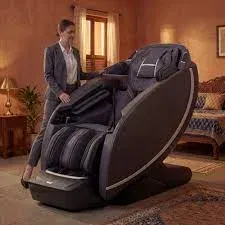
Luxury Massage Chair Technology: 3D, 4D, AI & Zero Gravity Explained
Updated: September 08, 2026
Read More
Premium Massage Chair Safety Features: Sensors, Controls & Anti-Pinch Systems
Updated: September 08, 2026
Read More
Luxury Massage Chair Guide: Features, Technology & Wellness Insights
Updated: September 08, 2026
Read More