Luxury Massage Chair Technology: 3D, 4D, AI & Zero Gravity Explained
Luxury massage chairs have evolved from simple vibrating recliners into sophisticated electromechanical systems that combine moving rollers, air compression, sensors, heating, reclining mechanisms and software-controlled massage programs.
Luxury massage chairs have evolved from simple vibrating recliners into sophisticated electromechanical systems that combine moving rollers, air compression, sensors, heating, reclining mechanisms and software-controlled massage programs.
Modern models can use technologies such as 3D and 4D roller systems, AI-assisted body scanning, zero-gravity positioning, SL-track mechanisms, targeted airbags, heat functions and voice or app controls.
However, technical labels can sometimes make these chairs difficult to understand. Terms such as "4D," "AI," "zero gravity" and "SL-track" describe different parts of the chair, not one single technology.
Understanding what each feature actually does makes it easier to compare modern massage-chair systems objectively.
What Is a Luxury Massage Chair?
A luxury massage chair is an electronically controlled chair designed to reproduce different massage movements through mechanical rollers, airbags and programmed motion.
Depending on the model, the chair may provide massage coverage across areas such as:
- Neck and shoulders
- Upper and lower back
- Waist and hips
- Arms and hands
- Thighs
- Calves
- Feet
The central mechanism is usually a roller system mounted along a track inside the backrest. Additional airbags can compress different parts of the body, while heating elements and reclining mechanisms add other layers to the experience.
Modern designs increasingly combine mechanical hardware with sensors and software. Some advanced systems can scan the user's body position and adjust roller placement or massage parameters accordingly.
Why 3D and 4D Technology Matters
The "D" terminology primarily describes how the massage rollers move.
The important distinction is that 3D adds adjustable depth, while 4D generally builds on 3D movement by controlling speed and rhythm more dynamically.
2D Massage Technology
2D is the simpler roller approach.
The rollers generally move:
- Up and down
- Side to side
The rollers operate on a relatively fixed plane, which provides basic coverage across the back.
2D technology can be suitable for people who want straightforward massage movements without extensive adjustment.
3D Massage Technology
3D adds another direction of movement: in and out.
This allows the rollers to move closer to or farther away from the body.
The result is adjustable massage depth rather than simply changing the overall program.
For example, a user may prefer:
- Gentle pressure around sensitive areas
- Moderate pressure around the shoulders
- Deeper pressure across larger muscle areas
This makes 3D technology an important step beyond basic fixed-depth roller systems.
4D Massage Technology
4D technology generally adds more sophisticated control over the speed, rhythm and timing of roller movements.
Instead of moving at a relatively uniform pace, the mechanism can vary its movement during a programmed massage.
This can create:
- Slower movements
- Faster movements
- Changes in rhythm
- More gradual transitions
- Longer pressure points
- More dynamic massage patterns
The fourth "dimension" is therefore often described as time or changing movement speed rather than a completely new physical direction.
3D vs 4D at a Glance
| Feature | 3D | 4D |
|---|---|---|
| Up/down movement | Yes | Yes |
| Side-to-side movement | Yes | Yes |
| Adjustable depth | Yes | Yes |
| Dynamic speed control | Limited/varies | More advanced |
| Rhythm variation | Limited/varies | More sophisticated |
| Massage personalization | High | Very high |
| Main advantage | Pressure/depth adjustment | Depth + dynamic movement |
The exact implementation varies between manufacturers, so the label alone should not determine the quality of a chair.
What Is AI Technology in a Massage Chair?
AI is one of the most widely used terms in modern massage-chair specifications.
In practical terms, AI-related functionality may involve body scanning, sensor data, automated program selection and adjustments to massage parameters.
A sophisticated chair can use sensors to estimate factors such as:
- Body position
- Shoulder location
- Back curvature
- User height
- Roller position
- Pressure or contact information
The software can then use this information to position the massage mechanism more appropriately.
Some advanced systems also attempt to adapt massage intensity, speed or roller movement based on sensor feedback.
AI Does Not Always Mean the Same Thing
This is an important distinction.
One chair's "AI" feature may primarily mean automated body scanning, while another may combine scanning with more extensive real-time adjustments.
Therefore, when comparing AI massage chairs, it is useful to ask:
- What sensors are actually included?
- Does the chair perform a body scan?
- What does the scan control?
- Can roller depth change automatically?
- Can massage speed change automatically?
- Does the system remember user preferences?
- Does it adapt during the session?
The word "AI" itself does not explain the complete technology.
How Body Scanning Works
Body scanning is designed to help the chair locate the user's body relative to its roller mechanism.
For example, if two people of different heights use the same chair, their shoulders and spine positions will not be identical.
A body-scanning system can help the chair adjust the massage area to the individual user.
A typical process may involve:
- The user sits in the chair.
- Sensors detect body position.
- The system estimates important anatomical reference points.
- The software adjusts the roller starting position.
- The selected massage program begins.
- Advanced systems may use additional sensor information during operation.
This can make the massage feel more consistent between different users.
What Is Zero Gravity?
Zero gravity is a reclining configuration designed to distribute body weight more evenly across the chair.
The concept is associated with the neutral body posture studied in aerospace research. Modern massage chairs use a reclined position with elevated legs to create a more supported posture.
The purpose is not to make the user literally weightless.
Instead, the reclining geometry changes how body weight is distributed across the backrest, seat and leg support.
Why Zero Gravity Is Used
A zero-gravity position can:
- Support a more reclined posture
- Distribute body weight across a larger surface
- Reduce pressure points
- Help the body relax during massage
- Position the body more consistently against the rollers
The exact angle and mechanism vary between chair designs, so "zero gravity" should not be treated as a single standardized mechanical specification.
Single vs Multiple Zero-Gravity Positions
Some chairs have one zero-gravity position, while more advanced models may provide multiple reclining configurations.
Multiple positions can allow users to select different combinations of:
- Backrest angle
- Leg elevation
- Roller contact
- Body support
This can be useful when different household members have different comfort preferences.
However, having several zero-gravity modes does not automatically make one chair better. The quality of the reclining mechanism and the way it works with the roller system are also important.
What Is an SL-Track?
The track determines how far the massage rollers travel.
An S-track generally follows the natural curve of the spine.
An L-track extends farther downward from the back toward the seat area.
An SL-track combines the curved back path with an extension toward the lower body.
This means the track design and roller technology perform different jobs.
3D or 4D describes roller movement.
S, L or SL describes track geometry and coverage.
A chair can therefore have a 4D roller mechanism and an SL-track at the same time because these technologies address different aspects of the system.
Airbag Compression Technology
Massage chairs do not rely only on mechanical rollers.
Many advanced models include airbags positioned around different parts of the body.
When inflated and deflated in programmed sequences, airbags can provide compression around areas such as:
- Shoulders
- Arms
- Hands
- Waist
- Hips
- Thighs
- Calves
- Feet
Air compression provides a different sensation from mechanical rolling.
Rollers primarily create targeted mechanical movement, while airbags provide broader compression.
The combination can create a more comprehensive full-body experience.
Foot and Calf Massage Technology
Premium massage chairs often include dedicated lower-leg mechanisms.
These may combine:
- Calf airbags
- Foot airbags
- Foot rollers
- Arch stimulation
- Sole pressure
- Calf compression
Foot rollers can move underneath the feet while airbags apply compression around the sides.
This gives the lower-body section a different mechanical function from the back rollers.
Heat Technology
Heating is another common feature in premium massage chairs.
Depending on the design, heating elements may be positioned around:
- Lower back
- Waist
- Legs
- Feet
- Backrest
Heat is generally used as a comfort feature alongside massage rather than as a replacement for mechanical massage.
Some chairs allow users to switch heat on or off or select different heating zones.
Massage Techniques Used by Modern Chairs
A sophisticated massage chair may offer several programmed techniques.
Kneading
Rollers move in circular or alternating patterns designed to imitate kneading movements.
Tapping
Rapid movements create a tapping sensation across selected areas.
Rolling
The rollers move smoothly along the back to provide a broader, more continuous movement.
Shiatsu-Inspired Programs
Some chairs use programmed pressure patterns inspired by traditional Japanese massage techniques.
Compression
Airbags inflate around selected body areas to create rhythmic pressure.
Stretch Programs
Some models combine reclining, leg movement and air compression to create stretching-style routines.
The quality of these techniques depends heavily on the underlying mechanical design and software programming rather than the number of programs listed on the specification sheet.
How AI, 4D and Zero Gravity Work Together
The most interesting aspect of modern luxury massage chairs is that these technologies are complementary.
Consider a typical sequence:
Body scan → Roller positioning → Zero-gravity recline → 4D movement → Air compression → Heat
Each component performs a different function.
The body scan helps identify where the user is positioned.
The reclining mechanism establishes the body posture.
The roller system delivers mechanical massage.
4D control can vary movement speed and rhythm.
Airbags add compression around other parts of the body.
Heat adds another comfort element.
This integrated approach is what makes modern massage chairs considerably more sophisticated than simple vibrating recliners.
Are 4D and AI the Same Thing?
No.
This is an important distinction.
4D primarily relates to the movement characteristics of the roller mechanism, particularly dynamic speed and rhythm control.
AI generally refers to software and sensor-based intelligence used for functions such as scanning, personalization and automated adjustment.
A chair can therefore have:
- 3D + AI
- 4D without advanced AI
- 4D + body scanning
- 4D + AI + zero gravity
- 3D + zero gravity without AI
These combinations demonstrate why comparing individual technologies is more useful than simply counting features.
What About 5D, 6D and 8D?
The market also contains massage chairs advertised with labels such as 5D, 6D and 8D.
These terms are not universally standardized.
Some manufacturers use higher numbers to describe combinations of roller movement, software, speed variation or additional functions rather than entirely new mechanical dimensions.
Therefore, a higher "D" number should not automatically be interpreted as superior technology.
When evaluating a chair, examine the actual mechanism:
- How do the rollers move?
- Can depth be adjusted?
- Can speed vary?
- Does the chair scan the body?
- What areas does the track cover?
- How many air-compression zones are included?
- What reclining positions are available?
This provides more useful information than relying solely on a large number printed in a specification sheet.
Smart Controls and Connectivity
Modern luxury massage chairs may also incorporate digital controls.
Depending on the model, these can include:
- Touchscreen controllers
- Smartphone applications
- Bluetooth connectivity
- Voice commands
- Preset user profiles
- Custom massage programs
- Adjustable roller intensity
- Adjustable airbag intensity
- Heat controls
These features improve convenience, but they do not necessarily improve the fundamental mechanical quality of the massage.
A well-designed roller mechanism remains more important than decorative technology.
Personalization Features
Personalization is becoming a major theme in premium massage-chair development.
Instead of providing one fixed program for every user, advanced chairs can provide controls for:
- Massage intensity
- Roller depth
- Speed
- Massage area
- Airbag pressure
- Heat
- Reclining position
- Program duration
Some systems combine these controls with body scanning and sensor feedback.
The goal is to create a more individualized experience rather than simply increasing the number of automatic programs.
What Makes a Massage Chair "Luxury"?
The luxury category is not determined by one feature.
A premium system typically combines multiple technologies into one integrated platform.
Important characteristics can include:
Advanced Roller Mechanism
3D or 4D movement can provide greater control over pressure, depth and rhythm.
Comprehensive Track
An appropriately designed S, L or SL track can extend massage coverage.
Body Scanning
Sensors can help position rollers according to the user's body.
Zero-Gravity Reclining
The chair can create a supported reclined position during massage.
Full-Body Air Compression
Multiple airbag zones can extend massage sensations beyond the back.
Heat
Heating can add warmth during selected programs.
Custom Programs
Users can adjust massage intensity and target areas.
Smart Controls
Touchscreens, applications and voice interfaces can simplify operation.
The combination of these features is generally more meaningful than any single specification.
Comparing the Main Technologies
| Technology | Main Function | Primary Benefit |
|---|---|---|
| 2D rollers | Two-direction movement | Basic massage |
| 3D rollers | Adds depth adjustment | More control over pressure |
| 4D rollers | Adds dynamic speed/rhythm | More fluid massage movement |
| AI/body scanning | Sensor-based personalization | Better positioning and adjustment |
| Zero gravity | Reclined body positioning | Weight distribution and relaxation |
| S-track | Curved spinal path | Follows back contour |
| L-track | Extended roller path | Greater lower-body coverage |
| SL-track | S + L configuration | Extended curved coverage |
| Airbags | Compression | Arms, legs, shoulders and hips |
| Heat | Controlled warmth | Added comfort |
| Smart controls | Digital operation | Personalization and convenience |
How to Evaluate a Luxury Massage Chair
Instead of choosing a chair based on its feature count, consider the technology hierarchy.
First: Examine the Roller System
The roller mechanism is one of the most important components.
Determine whether it uses 2D, 3D or 4D movement and understand what those terms mean for actual operation.
Second: Examine the Track
Look at where the rollers travel.
An extended track may provide coverage beyond the lower back, but the actual track design matters more than the letters "SL" alone.
Third: Check Body Scanning
Find out whether the chair actually scans body position and how that information is used.
Fourth: Understand Zero Gravity
Check how many reclining positions are available and whether the leg and back mechanisms move together smoothly.
Fifth: Examine Air Compression
Look at which parts of the body receive air compression.
Sixth: Consider Heat and Foot Functions
These can make the overall experience more comprehensive, particularly for users who want lower-body features.
Seventh: Look at Software
Consider whether programs are genuinely customizable or simply a large collection of preset routines.
Technology vs Marketing Claims
The massage-chair market contains many technical terms that sound impressive but require closer examination.
For example:
"AI-powered" does not necessarily mean the chair continuously learns from every session.
"4D" does not necessarily mean a completely different physical mechanism from a high-quality 3D system.
"Zero gravity" does not mean the user becomes weightless.
"SL-track" does not by itself guarantee superior massage coverage.
"5D or 8D" does not necessarily represent additional physical axes of roller movement.
Understanding the engineering behind each claim is therefore more useful than comparing feature counts.
Safety and Responsible Use
Massage chairs are consumer wellness devices, but they are not substitutes for professional medical evaluation.
Users should follow the manufacturer's instructions and avoid using a chair in ways that exceed its intended operating conditions.
Extra caution may be appropriate for people with certain medical conditions, recent injuries, implanted medical devices or other health considerations.
When in doubt, consulting an appropriate healthcare professional before using an intensive massage program is sensible.
The Future of Massage Chair Technology
Future development is likely to focus on greater personalization and improved sensor integration.
Potential areas include:
- More accurate body mapping
- Real-time pressure sensing
- Adaptive roller movement
- More sophisticated software
- Improved voice interfaces
- Personalized user profiles
- More precise lower-body movement
- Better integration between mechanical and digital systems
The long-term direction is moving from fixed programs toward increasingly adaptive systems.
The objective is not simply to add more features but to coordinate sensors, motors, airbags, heating and software more effectively.
Frequently Asked Questions
1. What is the difference between 3D and 4D massage chairs?
3D technology adds adjustable in-and-out roller movement, allowing greater control over massage depth. 4D technology generally builds on this by adding more dynamic control of speed and rhythm.
2. Does AI make a massage chair better?
AI-related functions can improve personalization when they genuinely use body scanning, sensors and adaptive software. However, the term "AI" can cover different capabilities, so the actual functions should be checked.
3. What does zero gravity mean in a massage chair?
Zero gravity refers to a reclined position designed to distribute body weight more evenly and create a supported posture while the massage mechanism operates.
4. Is 4D always better than 3D?
Not necessarily. 4D can provide more dynamic speed and rhythm control, but the overall experience also depends on roller quality, track design, body scanning, air compression and software.
5. What is an SL-track massage chair?
An SL-track combines a curved back track with an extended path toward the seat area. It can allow the rollers to cover a larger portion of the back and lower body.
6. Are 5D and 8D massage chairs actually more advanced?
Not automatically. Higher "D" labels are not standardized across the industry. The actual roller mechanism, speed control, depth adjustment and sensor technology are more useful indicators of capability.
Conclusion
Luxury massage chair technology has developed into a combination of mechanical engineering, electronics, sensors and software.
3D technology focuses on adjustable roller depth. 4D adds more dynamic movement, speed and rhythm. AI can support body scanning and personalization. Zero gravity changes the user's reclining position and weight distribution. SL-track designs can extend roller coverage, while airbags and heating add additional layers of functionality.
The most advanced chair is therefore not necessarily the one with the biggest feature list or highest "D" number.
A better approach is to understand how the individual technologies work together. A well-designed roller mechanism, accurate body positioning, effective track coverage, useful personalization and comfortable reclining geometry can matter considerably more than marketing terminology.
As massage-chair technology continues to develop, the industry is moving toward increasingly personalized systems that combine mechanical movement with intelligent sensing and software-controlled adjustment.
Disclaimer
This article is intended for general educational and informational purposes only. Massage-chair specifications, technologies and terminology can vary between manufacturers and models. Features described as AI, 3D, 4D, zero gravity or higher-dimensional massage may have different implementations across products. This article is not medical advice, a product endorsement or a substitute for professional healthcare guidance. Users should follow manufacturer instructions and consult an appropriate healthcare professional when they have health concerns or questions about using massage equipment.

Related Post...
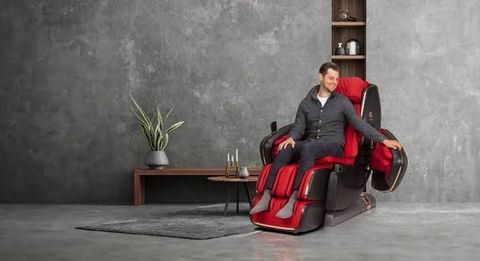
Luxury Massage Chair Guide: Features, Technology & Wellness Insights
Updated: September 08, 2026
Read More
Luxury Massage Chair Technology: 3D, 4D, AI & Zero Gravity Explained
Updated: September 08, 2026
Read More
Premium Massage Chair Safety Features: Sensors, Controls & Anti-Pinch Systems
Updated: September 08, 2026
Read More