Machine Manufacturers in Europe Explained: Industrial Equipment, Technologies & Manufacturing Insights
Europe has one of the world's most established machinery manufacturing ecosystems, covering everything from machine tools and industrial automation to packaging equipment, agricultural machinery, construction equipment, robotics and specialized production systems.
The European machinery industry combines engineering expertise, manufacturing infrastructure, research institutions and a large network of specialized manufacturers. According to the European Commission, mechanical engineering is one of the EU's largest industrial sectors by enterprises, employment, production and added value. The sector employs around 3 million people and Europe accounts for an estimated 36% of the global machinery market.
The industry is not concentrated in one country. Germany, Italy, France, the Netherlands, Sweden, Austria, Denmark and several Central and Eastern European countries contribute to different areas of machinery production.
Understanding this industry requires looking beyond individual manufacturers. Machine categories, production technologies, automation capabilities, industry applications, compliance requirements and after-sales infrastructure all influence the European machinery landscape.
What Are Machine Manufacturers?
Machine manufacturers are companies that design and produce mechanical equipment, industrial machines, production systems or specialized machinery for specific applications.
Their activities can include:
- Mechanical design
- Engineering
- Prototyping
- Component integration
- Machine production
- Automation integration
- Control-system development
- Testing
- Quality inspection
- Documentation
- Installation and commissioning
- Equipment maintenance
Some manufacturers focus on standardized machine families, while others specialize in highly customized equipment for particular production processes.
Why Europe Is Important in Machine Manufacturing
Europe has developed a strong machinery ecosystem through decades of industrial development and engineering specialization.
Several factors contribute to this position.
Engineering Expertise
European manufacturers have extensive experience in:
- Precision engineering
- Mechanical systems
- Industrial automation
- Robotics
- Process engineering
- Electrical controls
- Materials technology
Specialized Manufacturing
A significant portion of the European machinery industry consists of specialized companies producing equipment for specific industrial applications.
This allows manufacturers to develop deep expertise in areas such as:
- Metalworking
- Packaging
- Food processing
- Plastics
- Automotive production
- Energy
- Agriculture
- Construction
- Logistics
Research and Development
Machinery development increasingly combines mechanical engineering with:
- Artificial intelligence
- Industrial software
- Sensors
- Robotics
- Digital twins
- Machine vision
- Industrial connectivity
Export Orientation
European machinery manufacturers operate in a highly international market. VDMA estimates that EU machinery and equipment manufacturers generated approximately €900 billion in turnover in 2025, with about €296 billion associated with sales outside the EU single market.
Major Machine Manufacturing Countries in Europe
Germany
Germany is one of Europe's strongest machinery manufacturing centers.
The country's machinery and equipment sector covers a wide range of technologies, including:
- Machine tools
- Industrial automation
- Robotics
- Packaging equipment
- Process machinery
- Agricultural machinery
- Material-handling equipment
- Energy technology
- Industrial components
Germany accounted for approximately 36% of the EU machinery and equipment market in 2025, according to VDMA data.
Germany also has a large network of small and medium-sized engineering companies alongside major international manufacturers. Germany Trade & Invest describes machinery and equipment as one of the country's most important industrial sectors, with strong activity in digital manufacturing and Industrie 4.0.
Italy
Italy has a particularly broad machinery manufacturing base.
Its machinery ecosystem includes:
- Packaging machines
- Food-processing equipment
- Textile machinery
- Machine tools
- Plastics machinery
- Agricultural equipment
- Industrial automation
- Specialized production machinery
Italy's investment agency describes machinery and equipment as one of the country's most important manufacturing industries and identifies it as having the largest number of machinery and equipment companies in the EU.
France
France has important capabilities in:
- Aerospace equipment
- Agricultural machinery
- Food-processing machinery
- Industrial automation
- Energy equipment
- Packaging
- Specialized engineering systems
Its machinery ecosystem benefits from the country's large aerospace, automotive, food, energy and industrial sectors.
Netherlands
The Netherlands has strengths in:
- Semiconductor manufacturing equipment
- Agricultural technology
- Food-processing machinery
- Greenhouse technology
- Logistics automation
- High-precision engineering
Its compact but highly developed industrial ecosystem supports advanced equipment manufacturing.
Sweden
Sweden has a strong engineering tradition and is active in:
- Mining machinery
- Industrial automation
- Forestry equipment
- Material handling
- Manufacturing technology
- Heavy equipment
Austria
Austria contributes to European machinery manufacturing through:
- Industrial equipment
- Wood-processing machinery
- Metalworking equipment
- Automation
- Energy-related equipment
- Specialized engineering
Denmark
Denmark is particularly recognized for specialized machinery connected with:
- Food production
- Pharmaceutical manufacturing
- Renewable energy
- Industrial automation
- Process engineering
Spain
Spain has important machinery capabilities across:
- Automotive production equipment
- Packaging
- Food machinery
- Machine tools
- Agricultural equipment
- Industrial automation
Poland and Central Europe
Central and Eastern European countries have become increasingly important within European manufacturing supply chains.
Poland, Czechia, Hungary, Romania and neighboring markets contribute to:
- Industrial machinery
- Machine components
- Automotive equipment
- Metalworking
- Automation
- Production systems
VDMA reports that machinery production performance varies significantly across EU countries, with Poland among the countries showing stronger development in 2025.
Major Types of Machines Manufactured in Europe
European manufacturers produce equipment for almost every major industrial sector.
Machine Tools
Machine tools are used to shape and process materials.
Common examples include:
- CNC machining centers
- CNC lathes
- Milling machines
- Grinding machines
- Drilling machines
- Turning centers
- Laser-cutting systems
- Sheet-metal machinery
Machine tools form an important part of Europe's precision manufacturing ecosystem.
Industrial Robots
Robotic equipment can perform repetitive, precise or physically demanding production activities.
Applications include:
- Welding
- Assembly
- Palletizing
- Packaging
- Machine tending
- Painting
- Material handling
- Inspection
Packaging Machinery
Packaging machines are widely used in:
- Food production
- Pharmaceuticals
- Cosmetics
- Consumer goods
- Beverage production
- Industrial products
Machine types can include:
- Filling machines
- Labeling machines
- Cartoning machines
- Wrapping machines
- Sealing machines
- Case packers
Food Processing Machinery
European food machinery manufacturers produce equipment for:
- Mixing
- Cutting
- Cooking
- Filling
- Sorting
- Cleaning
- Processing
- Packaging
Italy, Germany, Denmark and several other European markets have developed strong food-processing equipment ecosystems.
Plastics Machinery
Plastics-processing equipment can include:
- Injection molding machines
- Extrusion machines
- Blow molding machines
- Thermoforming equipment
- Recycling machinery
EUROMAP maintains a European plastics and rubber machinery buyers guide covering manufacturers and technology providers from several European countries.
Agricultural Machinery
Agricultural machinery includes:
- Tractors
- Harvesting equipment
- Seeders
- Planters
- Sprayers
- Tillage equipment
- Irrigation systems
- Automated farming equipment
Modern agricultural machinery increasingly combines mechanical equipment with GPS, sensors, software and data systems.
Construction Machinery
Construction equipment includes:
- Excavators
- Loaders
- Cranes
- Concrete equipment
- Compaction machines
- Drilling equipment
- Road-building machinery
European manufacturers are also developing electrified and lower-emission equipment for construction applications.
Material Handling Equipment
Material-handling machinery supports the movement of goods and materials within industrial environments.
Examples include:
- Conveyors
- Automated storage systems
- Palletizing systems
- Sorting equipment
- Automated guided vehicles
- Robotic handling systems
Textile Machinery
European manufacturers also produce equipment for:
- Spinning
- Weaving
- Knitting
- Dyeing
- Finishing
- Fabric inspection
Italy, Germany and Switzerland have historically developed strong textile machinery capabilities.
Specialized Industrial Machines
Some European manufacturers focus on highly specialized equipment rather than general-purpose machines.
Examples include:
- Medical manufacturing equipment
- Pharmaceutical production machinery
- Semiconductor equipment
- Battery manufacturing machinery
- Aerospace production systems
- Railway manufacturing equipment
- Renewable-energy equipment
- Laboratory automation
- Recycling systems
Specialized machinery often requires close coordination between mechanical engineering, electronics, software and process engineering.
How Modern European Machines Are Designed
Modern machine development often follows a multidisciplinary process.
Concept Development
Engineers first define:
- Production requirements
- Machine capacity
- Operating environment
- Material characteristics
- Automation level
- Safety requirements
Mechanical Engineering
Mechanical components may be designed using CAD and simulation tools.
Engineers can evaluate:
- Structural strength
- Motion
- Vibration
- Thermal behavior
- Component life
- Mechanical tolerances
Electrical Engineering
Electrical systems may include:
- Motors
- Drives
- Sensors
- Controllers
- Switchgear
- Safety circuits
Software and Controls
Programmable logic controllers, industrial computers and software increasingly coordinate machine functions.
Prototype Development
Manufacturers may construct prototype systems to test:
- Performance
- Safety
- Accuracy
- Reliability
- Production speed
- Energy consumption
Testing and Validation
Testing verifies whether the machine meets its intended technical and safety requirements.
Automation in European Machinery
Automation is one of the most significant developments in modern machine manufacturing.
Automated machines can combine:
- Sensors
- Motors
- Robots
- PLCs
- Machine vision
- Industrial networks
- Artificial intelligence
- Data analytics
Automation can improve production consistency and reduce repetitive manual intervention.
Industry 4.0 and Smart Machines
Industry 4.0 refers broadly to connected, data-driven and intelligent manufacturing systems.
Modern European machines may include:
Industrial IoT
Machines can connect sensors and equipment to industrial networks.
Predictive Monitoring
Machine data can help identify unusual operating conditions before a major failure occurs.
Digital Twins
A digital twin can represent a physical machine or production process digitally, allowing engineers to analyze behavior and scenarios.
Machine Vision
Cameras and image-processing systems can inspect:
- Product dimensions
- Surface defects
- Assembly positions
- Labels
- Packaging
AI-Based Systems
Artificial intelligence can assist with:
- Quality inspection
- Process optimization
- Predictive analytics
- Pattern recognition
- Production scheduling
Energy Efficiency in Modern Machinery
Energy efficiency has become increasingly important in industrial equipment.
Manufacturers can address energy use through:
- Efficient motors
- Variable-speed drives
- Regenerative systems
- Optimized motion control
- Heat recovery
- Intelligent standby modes
- Improved machine design
Energy-efficient machinery can also contribute to broader industrial decarbonization goals.
European Machinery Safety and Compliance
Machine manufacturers operating in Europe must consider applicable safety and regulatory requirements.
The European Machinery Regulation, Regulation (EU) 2023/1230, establishes a modern framework for machinery safety and replaces the previous Machinery Directive. The regulation has an application date of 20 January 2027, with transitional provisions under the applicable framework.
Important areas can include:
- Machine safety
- Risk assessment
- Protective systems
- Emergency stopping
- Documentation
- Conformity assessment
- Instructions
- Technical documentation
The exact obligations depend on the machine type and applicable legislation.
Manufacturers should verify current requirements through official European Union sources before placing machinery on the European market.
CE Marking and Machinery
Many machines placed on the European market fall under EU legislation requiring conformity assessment and CE marking.
CE marking indicates that the manufacturer declares conformity with applicable EU requirements.
It should not be interpreted as a general guarantee of quality or performance.
Depending on the machine, manufacturers may need to address requirements involving:
- Machinery safety
- Electromagnetic compatibility
- Electrical safety
- Pressure equipment
- Radio equipment
- Other applicable legislation
Machine Quality Considerations
When evaluating machine manufacturers, technical specifications should be considered alongside the broader engineering system.
Precision
Precision can be important for:
- CNC machining
- Inspection
- Assembly
- Medical manufacturing
- Semiconductor applications
Reliability
Reliability depends on:
- Component quality
- Machine architecture
- Operating conditions
- Maintenance
- Control systems
Productivity
Important measures can include:
- Cycle time
- Throughput
- Availability
- Changeover time
- Automation level
Flexibility
Modern production environments may require machines capable of handling multiple products or production configurations.
Safety
Safety should be considered from the initial machine-design stage rather than treated as an afterthought.
How to Evaluate Machine Manufacturers
A structured evaluation can make comparison easier.
Manufacturing Expertise
Examine whether the manufacturer has experience with the relevant machine category and industry.
Technical Capability
Review:
- Machine architecture
- Automation
- Controls
- Precision
- Production capacity
- Integration capabilities
Documentation
Good technical documentation can include:
- Operating instructions
- Maintenance information
- Electrical diagrams
- Spare-parts documentation
- Safety information
- Compliance documentation
Testing
Ask how machines are tested and validated before delivery.
Integration
Consider compatibility with:
- Existing production equipment
- Industrial networks
- MES systems
- ERP systems
- Robots
- Sensors
Long-Term Support
Consider the availability of:
- Spare parts
- Technical documentation
- Software updates
- Maintenance resources
- Training
- Remote diagnostics
Machine Manufacturers vs Machine Integrators
These two roles are related but different.
Machine Manufacturer
A manufacturer generally designs and produces the machine itself.
System Integrator
An integrator may combine equipment from multiple manufacturers into a larger production system.
For example, an automated production cell might combine:
- CNC equipment
- Industrial robots
- Conveyors
- Machine vision
- Safety systems
- PLC controls
Understanding this distinction is useful when planning an automated production environment.
Custom Machinery in Europe
Not every industrial process can be handled by an off-the-shelf machine.
Custom machinery can be developed for specific:
- Products
- Production volumes
- Materials
- Factory layouts
- Automation requirements
- Safety conditions
European engineering companies often specialize in this type of application-specific equipment.
Custom machine development can involve:
- Process analysis
- Concept design
- Mechanical engineering
- Electrical design
- Automation development
- Prototype construction
- Testing
- Installation
- Validation
Role of SMEs in European Machinery
Small and medium-sized companies play a major role in European machinery manufacturing.
VDMA data indicates that the European machinery industry contains a large number of specialized businesses, while Germany alone has a particularly extensive network of small and medium-sized engineering companies.
These companies often specialize in narrow technological areas such as:
- Precision components
- Automation modules
- Machine tools
- Specialized processing equipment
- Sensors
- Industrial controls
- Packaging equipment
This specialization contributes to the depth of Europe's machinery supply chain.
Trends Shaping European Machine Manufacturing
Electrification
Industrial equipment is increasingly incorporating electric drives and energy-efficient systems.
Robotics
Robots are expanding from traditional automotive applications into:
- Logistics
- Food processing
- Electronics
- Warehousing
- Agriculture
- Healthcare manufacturing
Artificial Intelligence
AI is increasingly being explored for inspection, optimization and machine monitoring.
Digital Connectivity
Connected equipment enables manufacturers to collect and analyze operational data.
Sustainable Manufacturing
Manufacturers are focusing on:
- Lower energy consumption
- Longer equipment life
- Recyclable materials
- Efficient production
- Reduced waste
Modular Machine Design
Modular systems can make it easier to adapt machines to changing production requirements.
Additive Manufacturing
3D printing is being used for:
- Prototyping
- Specialized components
- Tooling
- Lightweight structures
- Complex geometries
Machine Manufacturing and Supply Chains
A modern machine rarely comes from a single production process.
Its supply chain can include:
- Steel producers
- Aluminum suppliers
- Bearing manufacturers
- Motor manufacturers
- Sensor companies
- Electronics manufacturers
- Software developers
- Automation specialists
- Precision machining companies
This interconnected ecosystem allows European manufacturers to develop increasingly sophisticated machines.
Common Challenges for European Machine Manufacturers
Energy and Production Costs
Energy-intensive manufacturing can face pressure from changing energy markets.
Global Competition
European manufacturers compete with companies from Asia, North America and other regions.
Supply Chain Disruptions
Machinery production depends on the availability of components and specialized materials.
Skilled Engineering Requirements
Advanced machinery requires expertise across mechanical, electrical, software and automation disciplines.
Regulatory Complexity
Manufacturers must continuously monitor changes in safety, environmental and digital regulations.
Digital Security
Connected industrial equipment introduces cybersecurity considerations that were less significant in traditional standalone machines.
Future of Machine Manufacturing in Europe
European machine manufacturing is increasingly moving toward connected, intelligent and energy-aware equipment.
Future machines are likely to combine:
- Mechanical engineering
- Robotics
- Artificial intelligence
- Industrial software
- Sensors
- Digital twins
- Advanced materials
- Energy management
- Cybersecurity
The European machinery industry already represents a major global manufacturing ecosystem. VDMA estimates EU machinery and equipment manufacturing generated around €900 billion in turnover in 2025, representing roughly 27% of global machinery turnover.
The future competitive advantage of European manufacturers will increasingly depend on how effectively they combine engineering precision with automation, digital technologies, sustainability and adaptable production systems.
Practical Checklist for Evaluating a European Machine Manufacturer
Before evaluating a manufacturer, consider:
- Machine category
- Industrial application
- Production capacity
- Precision requirements
- Automation level
- Energy consumption
- Safety requirements
- Regulatory compliance
- Machine dimensions
- Integration requirements
- Software and controls
- Documentation
- Testing procedures
- Spare-parts availability
- Maintenance requirements
- Upgrade possibilities
- Cybersecurity
- Manufacturer experience
- Long-term technical support
FAQs
Which European countries are major machine manufacturing centers?
Germany and Italy are particularly important, while France, the Netherlands, Sweden, Austria, Denmark, Spain, Poland and other European countries also have significant machinery manufacturing capabilities. VDMA's 2025 data places Germany, Italy and France among the largest contributors to the EU machinery market.
What types of machines are manufactured in Europe?
European manufacturers produce machine tools, robots, packaging machinery, agricultural equipment, food-processing systems, plastics machinery, construction equipment, material-handling systems, textile machinery and highly specialized industrial equipment.
Why is Germany important in European machine manufacturing?
Germany has a large and highly specialized machinery ecosystem, strong engineering expertise, extensive research networks and major capabilities in industrial automation and Industrie 4.0.
Is Italy important for machinery manufacturing?
Yes. Italy has a large machinery and equipment manufacturing base covering areas such as packaging, food processing, machine tools, plastics, automation and specialized industrial machinery.
What should be considered when evaluating a machine manufacturer?
Important factors include technical expertise, machine performance, precision, automation, safety, compliance, documentation, integration capability, testing, maintenance requirements and long-term equipment support.
Conclusion
Machine manufacturers in Europe form a diverse industrial ecosystem spanning precision engineering, automation, robotics, packaging, agriculture, construction, food processing, plastics, logistics and many specialized applications.
Germany remains one of Europe's most significant machinery manufacturing centers, while Italy has a particularly extensive machinery company base. France, the Netherlands, Sweden, Austria, Denmark, Spain, Poland and other European countries contribute important technologies and specialized capabilities.
Modern European machine manufacturing is increasingly moving beyond traditional mechanical engineering. Artificial intelligence, robotics, industrial connectivity, digital twins, machine vision and energy-efficient technologies are becoming increasingly important components of advanced equipment.
For anyone researching machine manufacturers in Europe, the most useful approach is to begin with the machine category and intended industrial application. From there, technical capability, compliance, automation, integration, documentation and long-term maintenance considerations can provide a more meaningful basis for evaluation than manufacturer reputation alone.
Europe's machinery industry therefore represents not one type of manufacturer, but a broad network of specialized engineering companies and industrial ecosystems working across many technologies and sectors.
Disclaimer
This article is intended for general educational and informational purposes only. Machinery specifications, regulatory requirements, conformity procedures, technical capabilities and manufacturing practices vary by machine type, manufacturer and jurisdiction. Readers should verify current requirements through official European Union, national regulatory and manufacturer documentation and consult qualified engineering professionals for project-specific decisions. This content is not technical, legal, engineering or regulatory advice and is not intended for brand promotion or sales purposes.

Related Post...
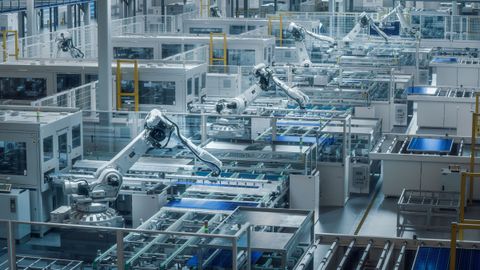
Machine Manufacturers in Europe Explained: Industrial Equipment, Technologies & Manufacturing Insights
Updated: September 02, 2026
Read More
Dental Chairs Explained: Types, Features, Ergonomic Design & Modern Dental Clinic Guide
Updated: July 27, 2026
Read More